
How to Sound Natural When Reading a Script on Camera
Oct 28, 2026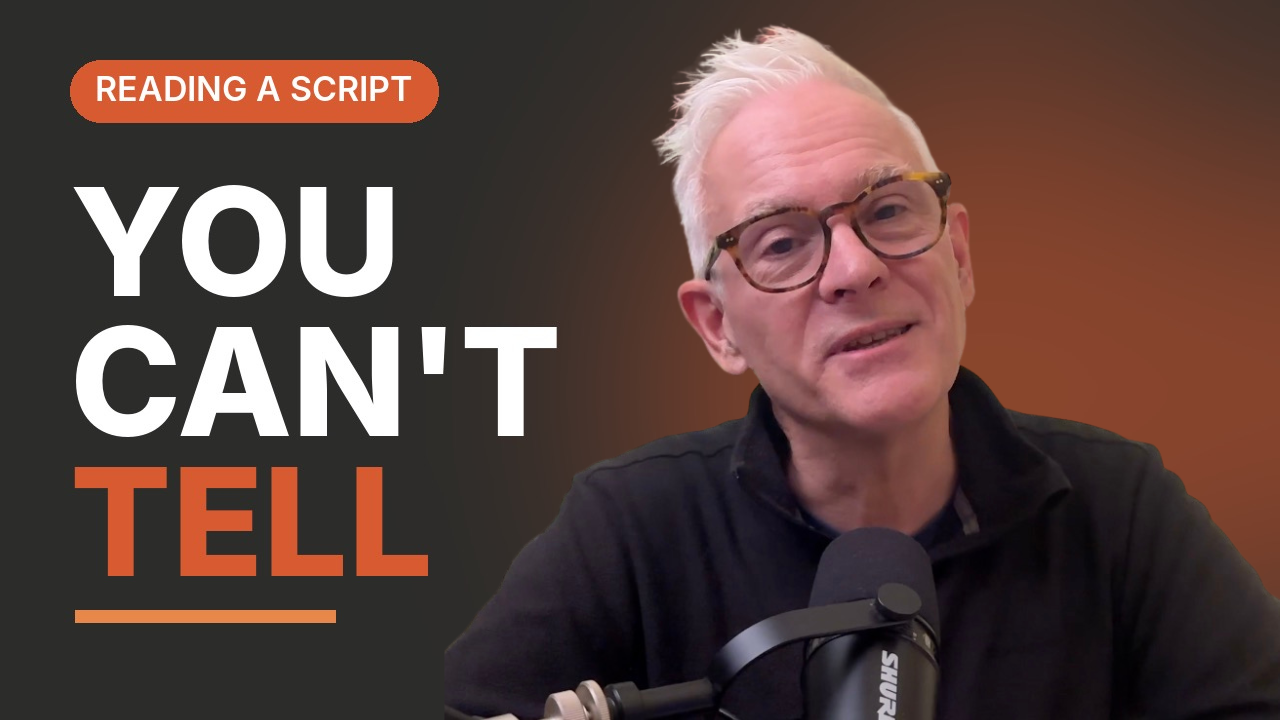
In this week’s video, I opened by telling you I was reading from a script, and that if I’d done my job properly, you wouldn’t have noticed. That’s the goal, and it’s very doable.
Most people think the script is the problem. It isn’t. A script only becomes a problem when it begins to sound like a script. Here are the five things I’d do before reading your next one.
1. Write for the ear, not the eye
We don’t speak the way we write. On the page, we use long sentences, formal words and tidy grammar. When we talk, we use shorter sentences and contractions. We start halfway through a thought, wander off, then come back.
So write the way you talk. Say “I’m”, not “I am”, and “we’ll”, not “we will”. Then test it: read every line out loud before you record. If you stumble, or it feels stiff, change it. If you wouldn’t say it to a friend, it probably doesn’t belong in your script.
2. Talk to one person
You may have heard that it’s easier to picture a room full of strangers. The trouble is that it makes you perform, and your voice either goes flat or gets too big.
Pick one person instead. Choose a client you’re working with, or have worked with, someone you know you can help and get on well with. Picture them just behind the lens and say your words to them. You’ll feel the difference straight away. Your face softens, your pace relaxes, and you sound conversational.
3. Mark your breaths
Most people rush on camera, and I’ve done it many times myself. When one sentence runs into the next, you sound rushed, you look nervous and you feel nervous.
Go through your script and mark where you want to pause. It might be after something important, an insight or an example. Those marks give you time to think and breathe, and they give your viewer time to take in what you’ve just said.
4. Know the shape of your script, not just the words
I sang for around 20 years, in clubs, bars, function rooms and jazz clubs, often the same songs night after night. You’d think that would make it automatic. But the secret was never memorising the words. It was knowing where the song was going: where it builds, where it softens and where it lands.
Scripts work the same way. Before you record, run through yours a few times. Don’t try to learn it word for word. Feel the shape of it instead: how the opening should feel, where it builds, and where you hope it lands for the person listening.
5. Decide how you want to sound before you press record
This is what I call the inner game when I work with clients. Ask yourself what tone you want today. Warm, upbeat, calm, steady, a little playful, more informative, more serious? Decide first, rather than working it out as you go.
Your script is not just the words. It’s also how you deliver them.
Putting it together
Write for the ear. Talk to one person. Remember to breathe. Get comfortable with the shape of what you’re saying and the tone you’ll say it in. Do these five things and your script will stop sounding like a script and start sounding like you, on a good day.
Want a quick reference?
I’ve put together a free one-page cheat sheet called Speak with Confidence. It’s a practical guide to help you feel more confident in meetings, presentations and on camera. Print it out, stick it to your screen or office wall, and use it when you’re preparing for your next call, meeting or presentation.

You know your stuff. But something happens when the camera comes on.
Find out what is really getting in the way. Take the free Camera Confidence Self-Assessment to spot the specific pattern that makes you freeze, overthink, or lose your natural voice on video.
